
Enable. Empower. Enrich.
At the heart of Shared Decision-Making (SDM) with older people is respect for the person’s right to be involved in decisions that affect their lives. This is particularly important for older people being discharged from hospital. By embracing shared decision-making health and social care professionals can ensure that older people and their carers are actively involved in decisions about their discharge, leading to more informed choices and improved outcomes.
In this video Siobhan Casey, the Commissioner for Older People for Northern Ireland talks about the importance of respect and shifting the focus of care and support from what is the matter with you towards what really matters to you.
What happens during the Shared Decision-Making process
This resource is underpinned by the shared decision-making principles outlined by the National Institute for Health and Care Excellence (NICE, 2021) Guideline NG197 on Shared Decision Making. This resource provides helpful tips for healthcare practitioners to encourage people to talk about what is important to them. For older people and their families and friends this resource provides guidance on how to become involved in the shared decision-making process. Good communication involving older people, and those who support them is a central part of good care. Across the resource, there are examples of how to share and discuss the information older people need ensuring they understand the choices available to them to make informed decisions. To achieve these principles, this resource uses the evidence based Three-Talk Model (1)Elwyn G, Durand MA, Song J, Aarts J, Barr PJ, Berger Z, et al. A three-talk model for shared decision making: multistage consultation process. bmj. 2017;359., a practical guide on how to do shared decision making.
Meet the Team
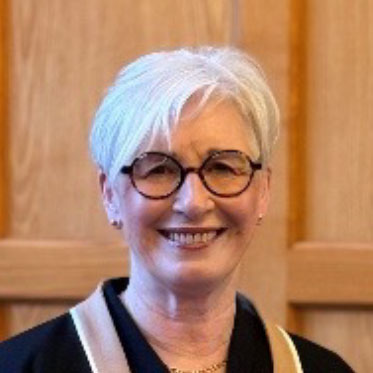
Professor Christine Brown Wilson
Queen’s University Belfast
Christine is Professor of Nursing (Education) and Director of Internationalisation at School of Nursing and Midwifery at Queen’s University Belfast. She has an international reputation in dementia and care homes research using participatory methods such as co-design. Christine has codesigned digital games and e-resources to promote the learning of health care professions and students. More information.
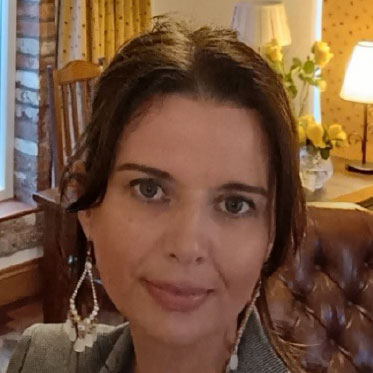
Kerrie McLarnon
Queen’s University Belfast
Registered Nurse, LLM, Medical Law
HSCNI R&D Doctoral Fellow, School of Nursing & Midwifery, Queen’s University Belfast.
Kerrie McLarnon’s career as a nurse in the NHS spans 30 years. Kerrie joined the School of Nursing & Midwifery in 2023 following receipt of a Doctoral Fellowship Award. Kerrie’s research focuses on mixed methods realist evaluation of a codesigned intervention to promote shared decision-making with older people, living with frailty, in planning hospital discharge.
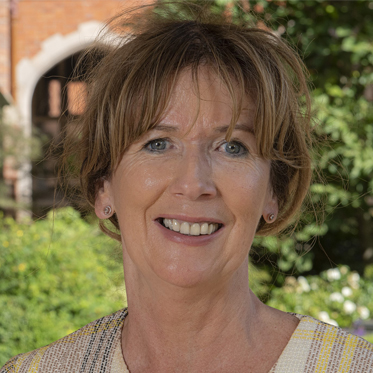
Dr Anita Mallon
Queen’s University Belfast
Dr Anita Mallon is a research fellow at Queen’s University Belfast. She has a background in Intensive Care Nursing and nurse education. Research interests include public health, palliative care, social care, resilience and improving the lives of people living with dementia and those who support them.

Dr Peter O'Halloran
Queen’s University Belfast
Registered Nurse, PhD
Honorary Senior Lecturer, School of Nursing & Midwifery, Queen’s University Belfast
Following a 20-year career as a nurse in the NHS, Dr O’Halloran joined the School of Nursing & Midwifery in 2003. His research focuses on organisational and clinical pathways for those with chronic diseases, or at the end of life; producing models of good practice for the implementation of complex interventions. Published studies include realist evaluations and realist reviews drawn from mixed methods studies, as well as randomised controlled trials of complex interventions, and Cochrane reviews.

Dr. Deirdre McGrath
Queen’s University Belfast
Deirdre is a Lecturer in Nursing in the School of Nursing and Midwifery, Queen’s University Belfast. Deirdre’s clinical background is in palliative care and oncology. Her field of research focuses on oncology and implementation of exercise interventions through the use of a realist approach. Deirdre also has a keen interest and experience in incorporating the contributions of patients, carers and health care professionals in developing and enhancing health care services.
Acknowledgements
Our sincere thanks to HSCNI, Public Health Agency, Research & Development Division for funding of the project that led to the development of this resource. Our thanks to the Belfast Health and Social Care Trust who funded this resource.
We are indebted to the many older people, family members and friends who brought the differing realities to the lived experience of older people and hospital discharge.
To the health and social care professionals whose passion, experience and generosity made this resource possible - thank you so much.
Many thanks to the Commissioner for Older People for Northern Ireland for advocating so eloquently for older people, powerfully portrayed on this resource.
Thank you to the many public bodies and voluntary organisations who supported this project; Age NI, Public Involvement Enhancing Research NI (PIER NI), the Patient Client Council (PCC), NI Frailty Network, QUB Patient and Carer Education Partnership Forum.
To our many Expert Advisory Group Members thank you for sharing your expertise so readily.
A special word of thanks to the Northern Health and Social Care Trust and Belfast Health and Social Care Trust for their support throughout this development process.
Thank you to Morrow Communications for your expert work and guidance in the development of this resource.


About this Resource
This resource is a guide to shared decision making for older people and their supporters whether that is a carer, a relative, a health and social care professional, or a friend. At the heart of this resource is collaboration and a recognition that health and social care decisions require mutual respect, a balance of power and the inclusion of people with expertise. While decisions relating to discharge from hospital is used as an example of shared decision making in this resource, the focus throughout this resource is on the person rather than a particular medical encounter (2)Clayman ML, Gulbrandsen P, Morris MA. A patient in the clinic; a person in the world. Why shared decision making needs to center on the person rather than the medical encounter. Patient education and counseling. 2017;100(3):600–4..
We hope you find this a helpful resource to increase knowledge, build confidence and help change practice, to ensure that people whose lives are most affected by health decisions are central to the decision-making process. This resource is currently being evaluated and we welcome your feedback.
In this video Professor Christine Brown Wilson highlights the importance of ensuring decision making is inclusive and person centred making this approach to care a normal and consistent part of everyday practice.
Background to shareddecisions.org.uk
Shared decision making considers that health and social care professionals and older people each have expertise that is valuable to shared decision making - the professionals as experts in the evidence and older people as experts in what matters most to them (3)Spatz ES, Krumholz HM, Moulton BW. Prime time for shared decision making. Jama. 2017;317(13):1309–10..
Partnership is at the centre of shared decision making and was a core part of the co-design of this resource. Whether an older person, or a carer, it is important that your voice, your experience, your expertise and your values are included to guide care decisions. Much more than receiving information, shared decision making is about having your choices and beliefs heard and clearly understood by all involved.
This resource has been designed with the principles of Universal Design for Learning. This means we use a variety of mediums to suit different ways of learning. In each section you will find information in easy-to-read text, key facts and information presented in infographic style, animations, videos and text. Please help us make this resource responsive to what you need by completing the evaluation form. Following completion of the evaluation form you can download a certificate of achievement for your records to say you have completed the e-learning within this resource.
Intro to each unit of learning
Unit 1: Team Talk
The unit aims to build an understanding of the importance of shared decision making to the individual and those involved in their care. We know there are many influences on the decisions we make. What is most important to us will be shaped by our experience, attitudes, our support networks, capabilities and our perceived roles in society. We bring ourselves to this process and each contribution is important so that the decisions are right for us and enhance our lives.
Unit 2: Option Talk
This unit aims to build an understanding of the importance of evaluating alternative options, including risks and benefits within the decision-making process. We focus on communication tailored to the individual and supported through use of well-structured decision-making tools. Emphasis is placed on early conversations which are clear, open and honest and revisited.
Unit 3: Decision Talk
In this unit we delve into achieving a decision, one that includes the preferences of older people and their supporters, guided by experience and expertise of the health and social care professionals. Testimonials of how shared decision making were successfully implemented in practice are reported. This is not the end point but one point on the older person’s journey where the integration of health and social care is central to sustaining and supporting decision making.
Disclaimer: This e-resource contains information, advice and guidance to help health and social care staff and people using these services. The information on this website has been developed with professionals, academics and older people, their family and friends. Whilst every effort has been made to ensure the information is accurate and up to date, the website has been co-designed and reflects experiences shared with the co-design group. The resource has been developed with significant input from practitioners in the health and social care sector. However, the views and opinions expressed do not necessarily reflect those of the funding body or the wider health service.